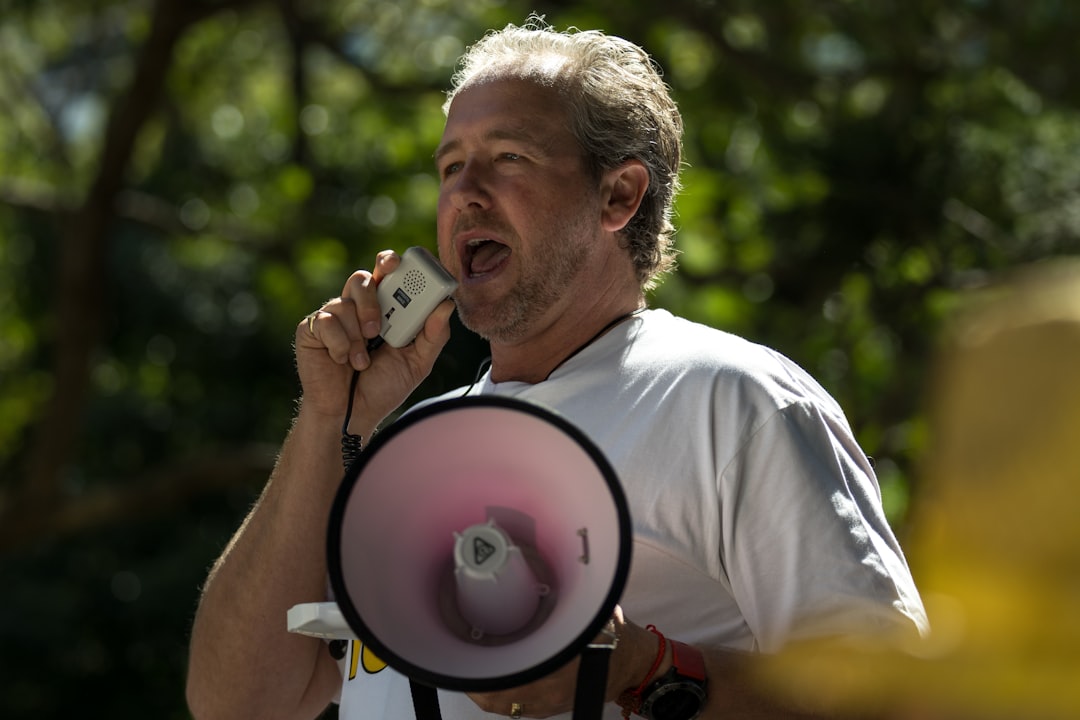
Learning how to direct a voice over session comes down to one brutal truth: the first take is usually the best, and most clients don't believe it until they've wasted an hour proving it to themselves. I've been in this industry for over 20 years, and the pattern repeats constantly. A client books a session, the voice talent delivers a strong first read, and then the direction begins. Take two. Take five. Take seventeen. By take thirty, everyone's exhausted, the voice is fatigued, and guess which take gets used in the final cut? The first one.
The 50-Take Trap
Here's what happens in almost every over-directed session. The client hears the first take and thinks, "That's good, but let me see what else we can get." Reasonable instinct. Except the voice over artist already spent time analyzing your script, understanding the product, making interpretive choices. That first take represents their professional judgment about what works.
When you ask for fifty variations, you're not exploring possibilities. You're eroding the performance. Each subsequent take moves further from the natural interpretation and closer to a kind of vocal chaos where the talent is just guessing what you want. According to research published in the Journal of Voice, vocal fatigue measurably affects pitch stability and tonal quality after extended recording sessions. By take forty, you're not getting better options. You're getting worse ones.
And then you pick take one anyway.
"Don't Sound Like a Voice Over"
Clients have been giving this direction for at least a decade. I've heard it hundreds of times. The voice over artist has heard it thousands of times. But here's what you actually mean when you say it: don't sound like a 1950s announcer with that booming, artificial radio voice that nobody uses anymore.
What you don't mean is that you want someone who speaks poorly. You hired a voice over professional because you want someone who enunciates clearly, has good breath control, can hit timing marks, and sounds like they belong on a broadcast. You want a voice over artist. You just want one who sounds contemporary. The professional already knows this. When you give this direction, they nod politely because they've internalized it years ago. What actually helps is specific direction: "more conversational," "like you're talking to a friend," "less energy on the opening line." That's actionable. "Don't sound like a voice over" is just describing a problem that doesn't exist in 2026.
Send the Music
One of the simplest things you can do to improve your VO session direction has nothing to do with words. Send the music track that will accompany the spot.
A voice over artist performing against silence is working blind. They don't know the emotional temperature of the piece, the pacing, the build. When they have the music, they instinctively match its energy. The read becomes more natural because they're responding to something real, the same way an actor performs better with a scene partner than alone in a casting room. I always ask clients to send whatever music or scratch track they have, even if it's not final. The improvement in the first take is immediate.
The Client Is Always Right (But Here's How to Be Better)
I believe completely that the client has final say. The voice over artist is a professional at the service of advertising. If you want to make art, do it at home on your own time. During a session, you adapt to what the client needs. Faster, slower, more warmth, less warmth, pick up the energy in the middle, whatever. The talent must execute without complaint.
But being a good client means understanding how to get the best performance out of your hired professional. Have you ever directed a session where every take sounded worse than the last, and you couldn't figure out why? It's usually because the direction was contradictory or too abstract. Saying "make it more dynamic but also more intimate" gives the talent nowhere to go. Saying "I want it to feel like Nike but also warm like a local business" is asking for two incompatible things.
Good direction is specific and singular. One adjustment at a time. "Can you bring more energy to the product name?" is a direction. "Can you make the whole thing feel different somehow?" is not. The voice talent wants to give you what you need. They're literally being paid to do that. Make it possible for them by being clear.
Spanish Scripts Need Surgery
If your script was written in English and translated to Spanish, it's too long. This isn't opinion. Spanish runs approximately 20-30% longer than English for the same content, a fact confirmed by multiple localization industry studies including data from the Globalization and Localization Association. A thirty-second English script becomes a thirty-eight-second Spanish script. When you force the voice talent to cram it into the original timing, the delivery sounds rushed and unnatural.
The fix is simple: cut the script before the session. Remove redundancies, simplify phrasing, eliminate filler. Or extend the spot length. But don't ask the talent to speak faster to compensate for a translation problem. Fast Spanish doesn't sound energetic. It sounds panicked. (This is why I always recommend reviewing Spanish scripts with a native speaker before booking studio time — a ten-minute conversation saves hours of frustration.)
Neutral Spanish Solves the Accent Problem
Latin American audiences have complicated relationships with regional accents. A Mexican viewer hearing a strong Argentine accent will notice it. An Argentine hearing Colombian regionalism will notice it. This isn't prejudice — it's just how human attention works. Regional markers pull focus from the message to the messenger.
Neutral Spanish eliminates this. It's the broadcast standard across Latin America precisely because it doesn't trigger regional associations. No country owns it, so no country rejects it. According to Nielsen's research on Hispanic media consumption, pan-regional content consistently outperforms regionally-specific content when targeting US Latinos, largely because the US Hispanic population includes origins from every Spanish-speaking country. Neutral Spanish serves everyone without alienating anyone.
And no, a Spain accent is not the sophisticated option. Latin Americans mock the Castilian accent. It's not the equivalent of a British accent to American ears. It's more like the equivalent of someone putting on an affected voice that sounds pretentious. If your agency suggested a Spain accent for a US Latino campaign, they don't understand the market.
Trust the Professional's First Instinct
The voice over artist you hired has done this thousands of times. They've recorded for Coca-Cola, Ford, Netflix, Amazon, every major brand you can name. When they deliver that first take, it represents accumulated professional judgment about what works. Give it the respect it deserves. Listen to it twice before asking for changes. Sometimes you'll realize it was right all along, and you just needed a moment to hear it clearly.
If changes are needed, make them specific. One direction at a time. And remember: by take fifteen, you're usually not getting closer to what you want. You're getting further away, and you're going to end up back at the beginning anyway.
Need a Spanish voice over for your next project? Get in touch and I'll get back to you within the hour.